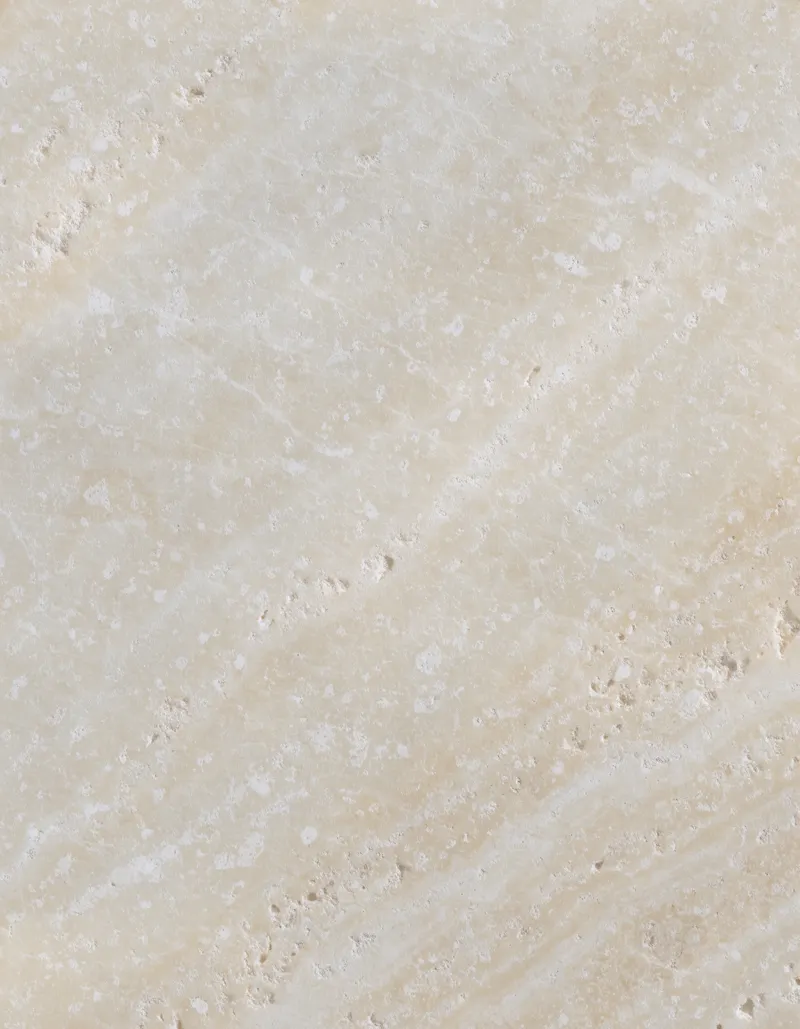
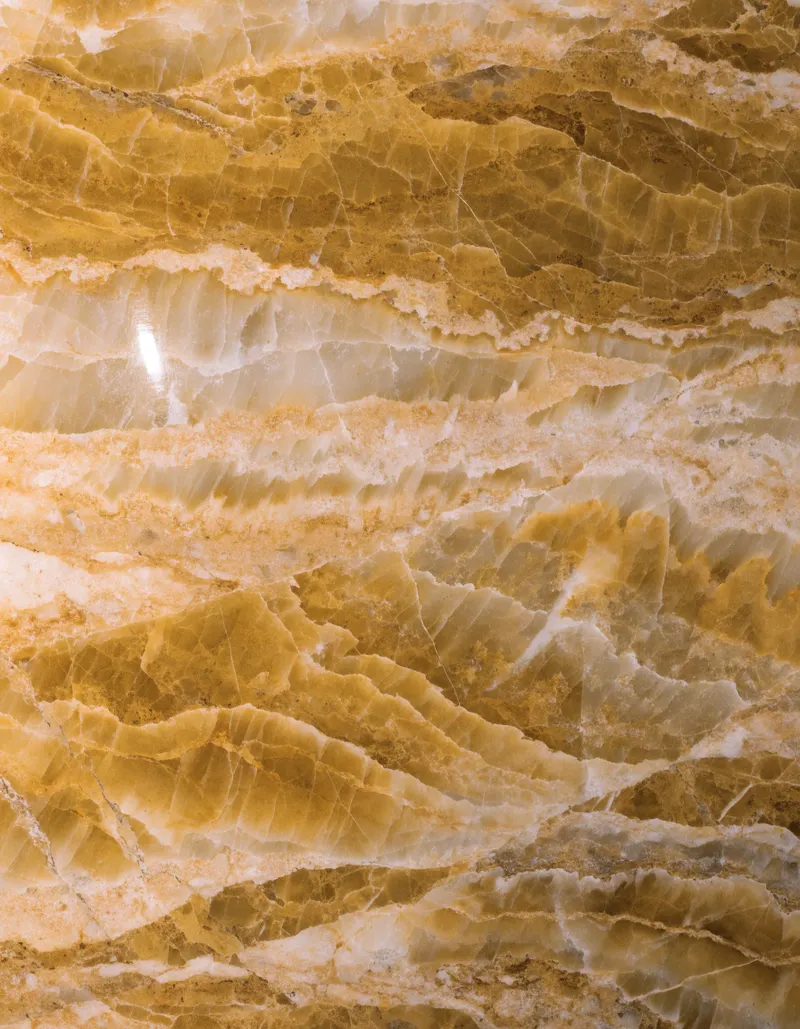
One block, nine stages. How Egyptian marble and granite travel from the quarry bench through saw, polish and dry-lay inspection to a crate on a truck.
Buying stone is buying a process. The surface that arrives on your site is the last frame of a sequence that began at a rock face, and almost everything you will judge it by (thickness, colour match, edge quality, whether the crate arrives unbroken) was decided at a particular station, by a particular machine, weeks earlier.
Here is that sequence, stage by stage, as Egyptian marble and granite are made. Jodad works the whole of it, because quarrying, sourcing, processing and installation sit under one roof. Read it as a map of where each decision happens, and when to ask your question.
1. The quarry face
Stone begins as a bench in a mountain. Blocks are freed from that bench and squared, and at this point nothing about them is decorative: a block is volume, weight, and a set of unknowns. The vein inside is invisible. Two blocks taken from benches a few metres apart can carry noticeably different colour.
That is the first thing to hold on to as a buyer. Colour in natural stone is a range, not a value. Every stage below manages that range. None of them removes it.
2. Professionally selected and loaded
Before a block travels it is read: squared faces, soundness, colour, and the bench it came from. Recording the source is what makes a repeat order possible, because a project that needs to match an earlier delivery is really asking to go back to the same bench.
Ask, at this stage, for photographs of the block dry and wet. Water previews, roughly, what a polish will do to the colour, and it is the cheapest preview in the industry.
3. Opening the block
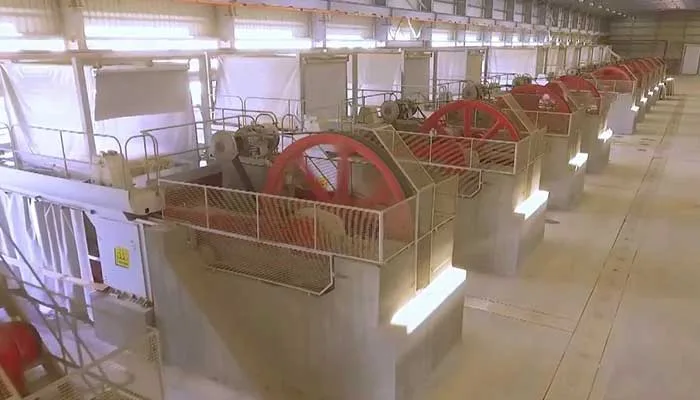
A gangsaw takes the whole block down at once, blade after blade, into slabs of the thickness you specify. A multi disc block cutter does the same work with rotating discs, and a block disc cutter handles smaller sections and squaring.
The slabs come off in sequence, and that sequence is worth money. Consecutive slabs from one block can be book matched into a mirrored pattern, or laid in run so a vein carries continuously across a floor or a wall. Split the same quantity across two blocks and that continuity is gone for good.
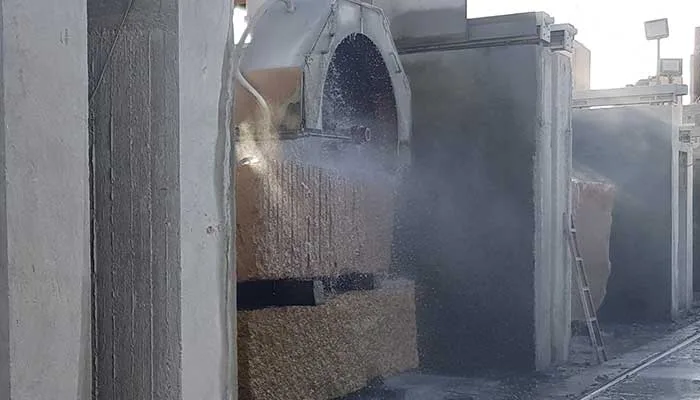
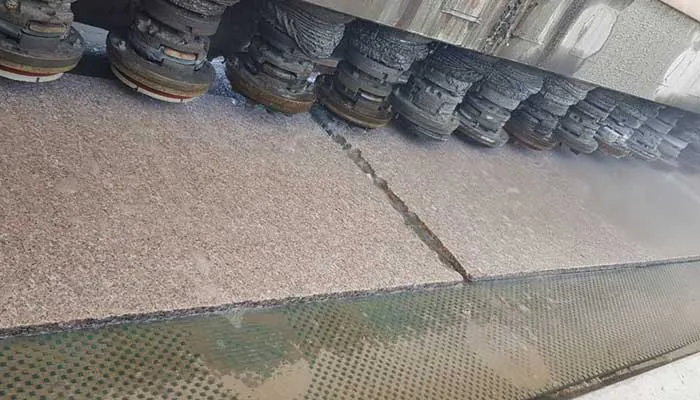
4. Polishing the slabs
A slab off the saw is flat but dull. The slabs polishing machine and the treatment and polishing line pass heads across the face with progressively finer abrasives, and the stone's colour arrives with them: the same limestone reads pale and chalky sawn, warm and deep polished.
This is the stage where a stone stops being geology and starts being a material with a mood. It is also where you should stop trusting an unpolished sample to tell you anything about the final colour.
5. Cut to size
Bridge cutters and automatic cut to size lines bring pieces to dimension: floor formats, cladding panels, treads and risers, pool coping, sills, vanity tops.
Everything here is driven by your drawing. A dimension that is vague on paper becomes a decision someone else makes on the saw, so this is the stage that rewards precision earlier: piece numbering keyed to a lay plan, and agreement on which faces and edges are finished.
6. Edges and profiles
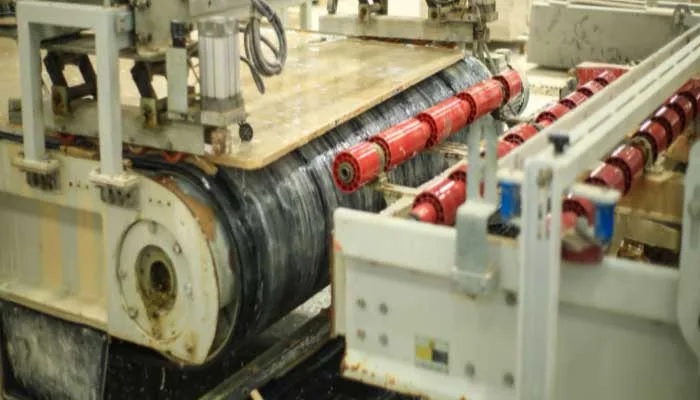
The edge profiling line and the bolsters CNC cut what the saw cannot: bullnose noses for treads and pool coping, chamfers, rebates, drainage grooves, cut outs.
Outside, the edge is what takes the abuse, and it is the detail most often left off a drawing. Put the profile on the drawing. It is the first thing to fail when nobody specifies it.

7. The finish
The same stone becomes a different material depending on how its face is treated: polished, honed, brushed, sandblasted, bush hammered, tumbled, acid, flamed, chiseled, stripped, bullnose, raw. Heat, texture and abrasion change colour, glare, grip and how the surface ages.
Finish is a design decision, not a last-minute one, and it is the cheapest way to make one stone do several jobs in one building. It has its own guide here: one stone, many faces.
8. Dry-lay inspection
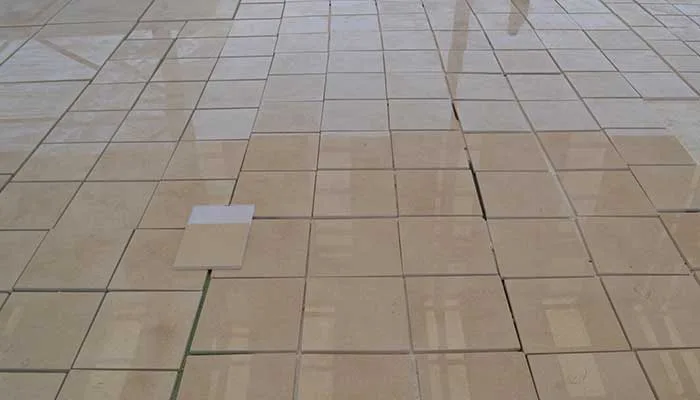
Before anything is packed, the order is laid out on the factory floor and inspected: colour, match, dimension, finish, quality. It is the one stage that exists purely to catch the other eight, and the only moment when a problem is still cheap to fix.
If the project needs one batch across a whole elevation or floor, say so at enquiry, not here. Selection can be planned around a single batch. It cannot be arranged retroactively.
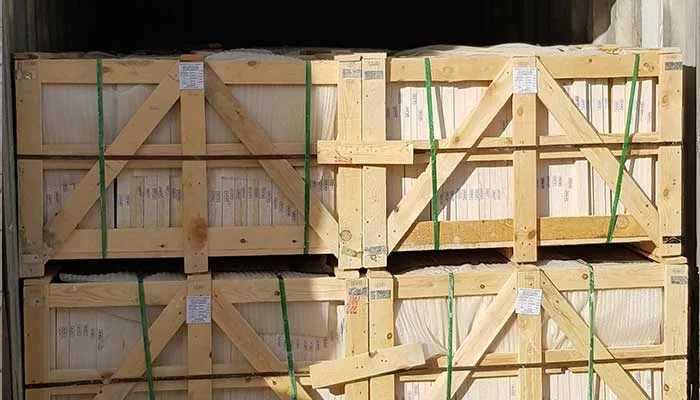
9. Crates and bundles
Slabs travel in bundles, cut to size travels in crates, and both are built for the road and the container rather than for the warehouse. Wooden crates packing, wooden bundles packing, and loading for domestic and international delivery are the last stage of manufacture, not an afterthought to it.
What to ask, and when
- At the block: dimensions, photographs dry and wet, the bench or source, whether it can be repeated.
- At the saw: thickness, and whether the quantity comes from one block or several.
- At the polisher: a sample in the actual finish, not a polished stand-in for a honed order.
- At cut to size: a drawing with dimensions and edge profiles, and piece numbering keyed to a lay plan.
- At dry-lay: photographs of the laid order before packing.
- At packing: crate or bundle counts, weights, and how the load will be unloaded at your end.
Why one roof matters
A trader sells you a photograph and passes your drawing along. A manufacturer owns the saw that cuts your thickness, the line that sets your finish, the floor your order is laid out on, and the crate it leaves in.
When the chain is one company, a colour question is answered by looking at the block, not by email. That is the whole argument for buying Egyptian marble from the factory that makes it, and it is why the format you choose (block, slab or cut to size) is the first real decision of any order.
Quality in details, decided in the right order.