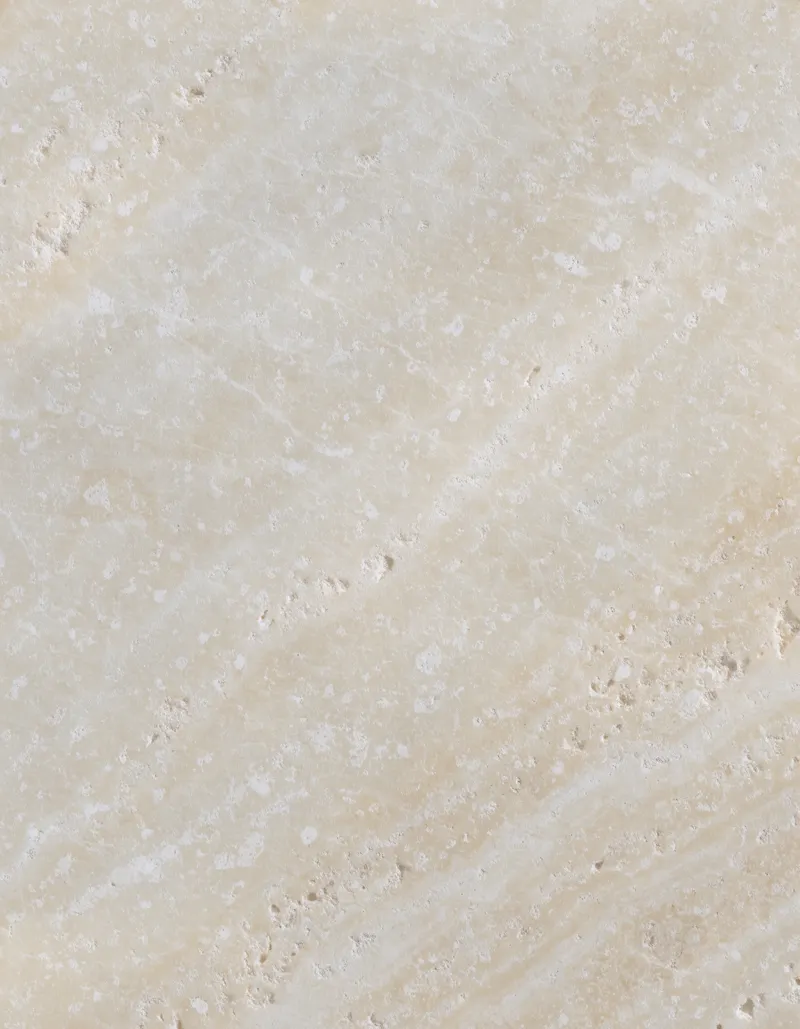
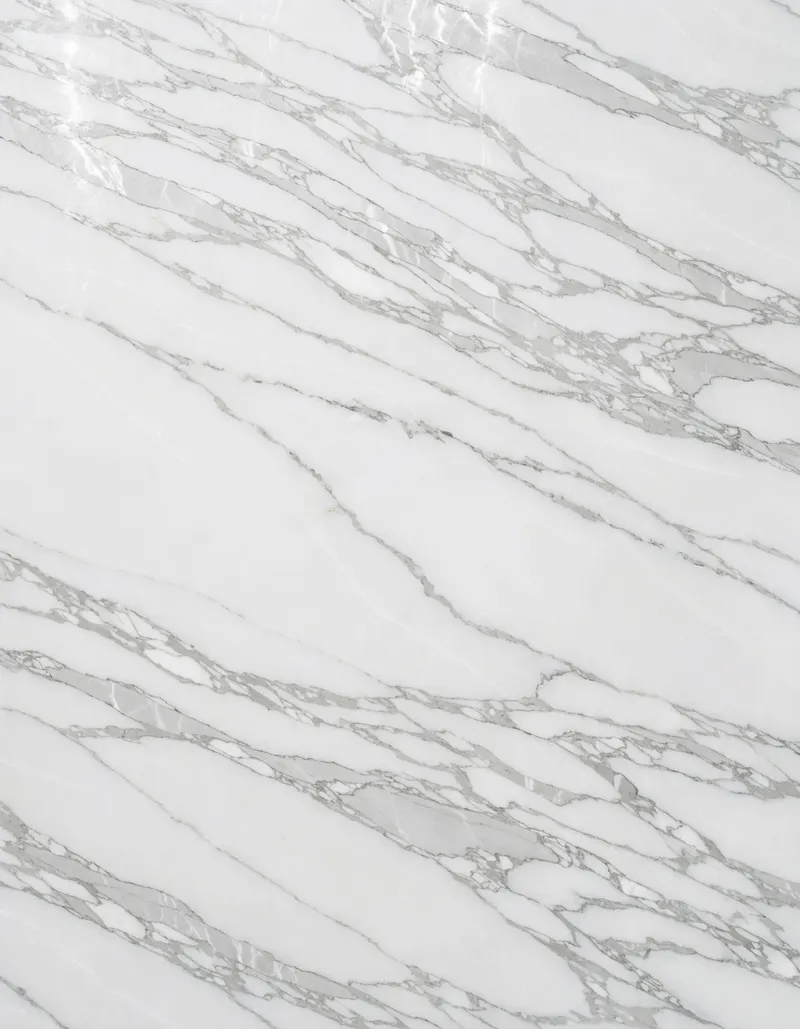
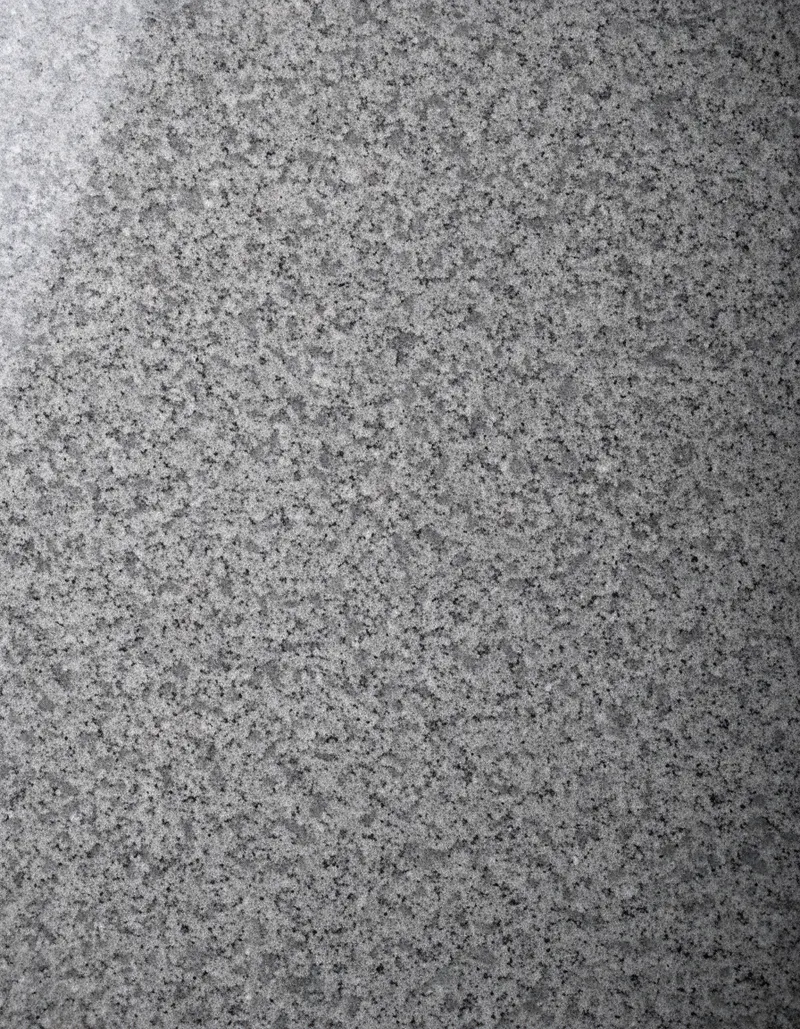
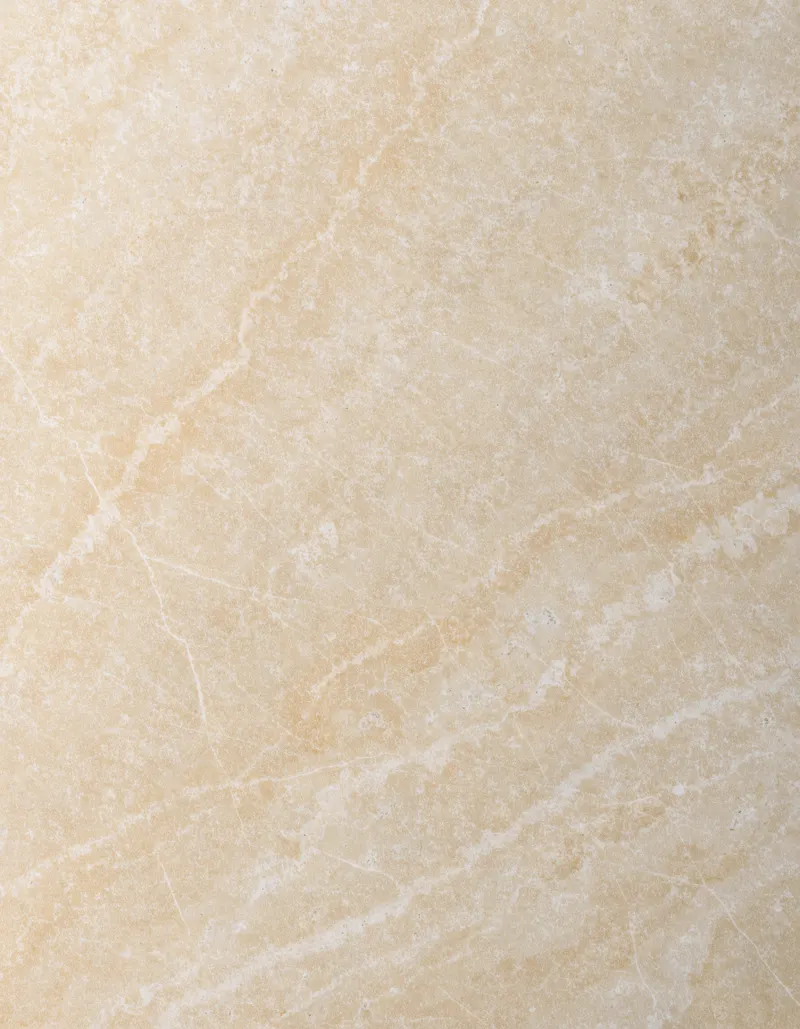
The same stone reaches you three ways. The format decides who carries the yield risk, who owns the offcuts, and what is still open when the crate closes.
A stone is not one product. The same block, from the same bench of the same quarry, can reach you as a rough block, as a bundle of slabs, or as numbered pieces cut to your drawings.
The format is not a detail of the order. It decides who carries the yield risk, who owns the offcuts, and how many decisions are still open by the time the crate closes. Jodad works all three, because quarrying, sourcing, processing and installation sit under one roof. Here is how to choose your point of entry.
| Block | Slab | Cut to size | |
|---|---|---|---|
| You buy by | Volume | Area | The piece |
| Yield risk sits with | You | Us | Us |
| Offcuts belong to | You | You | Us |
| You need | Gangsaw, lifting gear, offcut space | Bridge saw, edge tooling | A drawing and a lay plan |
| Still open on arrival | Thickness, vein direction, show face | Cutting, edges, finish | Nothing |
| Choose it if | You own the saws | You fabricate | Your value is on site |
The block
A block is the mountain, squared. It is cut at the quarry face, professionally selected and loaded, and it arrives as raw as that sounds. You buy it by volume, and everything downstream stays in your hands: the thickness you saw to, the direction you open the vein, which face becomes the show face.
Buy blocks if you own the saws. A block gives the lowest cost per finished square metre and the highest control over yield. In exchange it asks for a gangsaw or a multi disc cutter, lifting gear at both ends, somewhere to put the offcuts, and a tolerance for the truth of natural stone: nobody knows exactly what is inside until it is open.
Ask for overall dimensions, photographs dry and wet, and confirmation of the bench if you are matching an earlier delivery. Insist on the wet photographs. Water previews, roughly, what a polish will do to the colour.
The slab
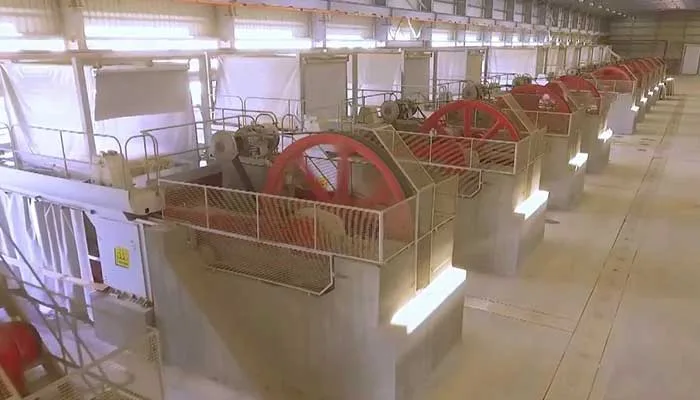
A slab is a block already opened. Gangsaws and multi disc cutters take the block down to the thickness you specify, and the slabs come off in sequence.
That sequence is the point. Consecutive slabs from one block can be book matched into a mirrored pattern, or laid in run so a vein carries continuously across a floor or a wall. Split the same quantity across two blocks and that continuity is gone.
Buy slabs if you fabricate. You are buying by area with the sawing risk already absorbed, and you keep the cutting, the edges and the finish.
Ask for bundle numbers, wet photographs of complete bundles rather than one hero slab, and a straight answer on whether the quantity comes from a single block or several.
Cut to size
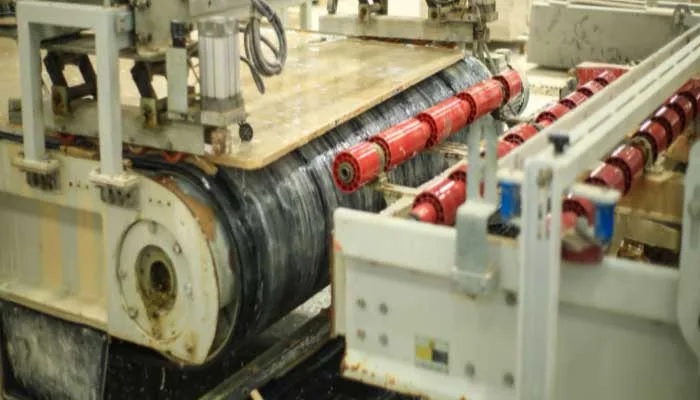
Cut to size is stone that arrives finished. Bridge cutters and automatic lines bring pieces to dimension, edge profiling and CNC bolsters cut the profiles, and the polishing and treatment lines set the surface. Floor formats, cladding panels, treads and risers, pool coping, sills and vanity tops land numbered and ready to lay.
Buy cut to size if your value is on site rather than in a workshop. It is the shortest route from container to installed surface, and the least forgiving of a vague drawing: every dimension, every edge profile, every rebate is decided before the saws run.
Ask for a drawing with dimensions and edge profiles marked, piece numbering keyed to a lay plan, and agreement on which faces and edges are finished.
Thickness, and who decides it
Thickness is the quietest decision in the order and the one that moves cost most.
Buy blocks and it is entirely yours: you saw to whatever the job needs, and the number of slabs you get out of a cubic metre is a direct consequence. Buy slabs and you are choosing from what the saw was set to. Buy cut to size and the drawing has usually decided it already, often implicitly, through an edge profile or a rebate that only works at one thickness.
The mistake worth avoiding is specifying a thickness in isolation. A floor tile, a cladding panel that hangs off an anchor, a stair tread carrying its own span and a vanity top with a cut-out are four different structural problems, and the answer belongs to whoever is engineering the fixing, not to the stone supplier. Bring the fixing detail with the drawing and the thickness answers itself.
Three mistakes that cost real money
Splitting a continuous surface across two blocks. Vein and colour do not travel between blocks. If a floor, a wall or an elevation has to read as one field, it has to be planned as one field, at enquiry, before anything is sawn.
Approving a sample in the wrong finish. Polish deepens colour, heat and abrasion lift it lighter. A polished sample approved for a flamed order is not an approval, it is a misunderstanding waiting to arrive in a crate.
Leaving the edge off the drawing. Every exposed edge is a decision — bullnose, chamfer, square, rebated. Left blank, it becomes someone else's decision, and it is the first detail to chip, cut a foot or look wrong.
What to send with an enquiry
Send these and a quotation becomes a short conversation instead of a long one.
- Stone name, and the alternates you would accept (the collection lists them)
- Format: block, slab or cut to size
- Thickness, or the drawing that implies it
- Finish, or a finish per element
- Quantity, in the unit that matches the format
- Destination, and how the load will be unloaded
- Whether the whole quantity has to match one batch
- Drawings, for anything cut to size
Before anything ships
Whichever format you buy, the order is dry laid and inspected before packing: pieces set out on the floor and read for colour, match and quality the way they will be read on site. Then it is crated or bundled for the journey, domestic or international.
Colour is a range, not a value. Natural stone moves from bench to bench and block to block. Say early if the project needs one batch, so the selection can be planned around it rather than explained afterwards.
Quality in details, decided in the right order.