Granite
This is the granite of the obelisks. The belt around Aswan has been worked since the Old Kingdom, and surfaces cut from it in antiquity are still legible after thousands of years of sun, sand and flood — the longest reference list any building stone can offer.
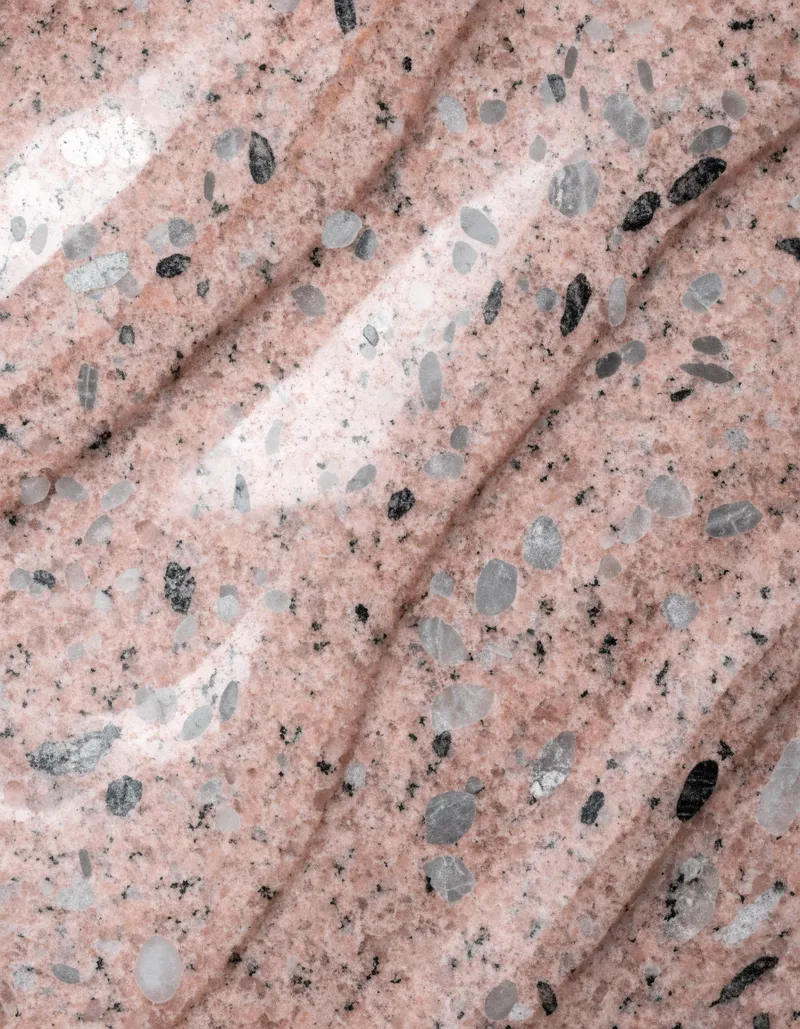
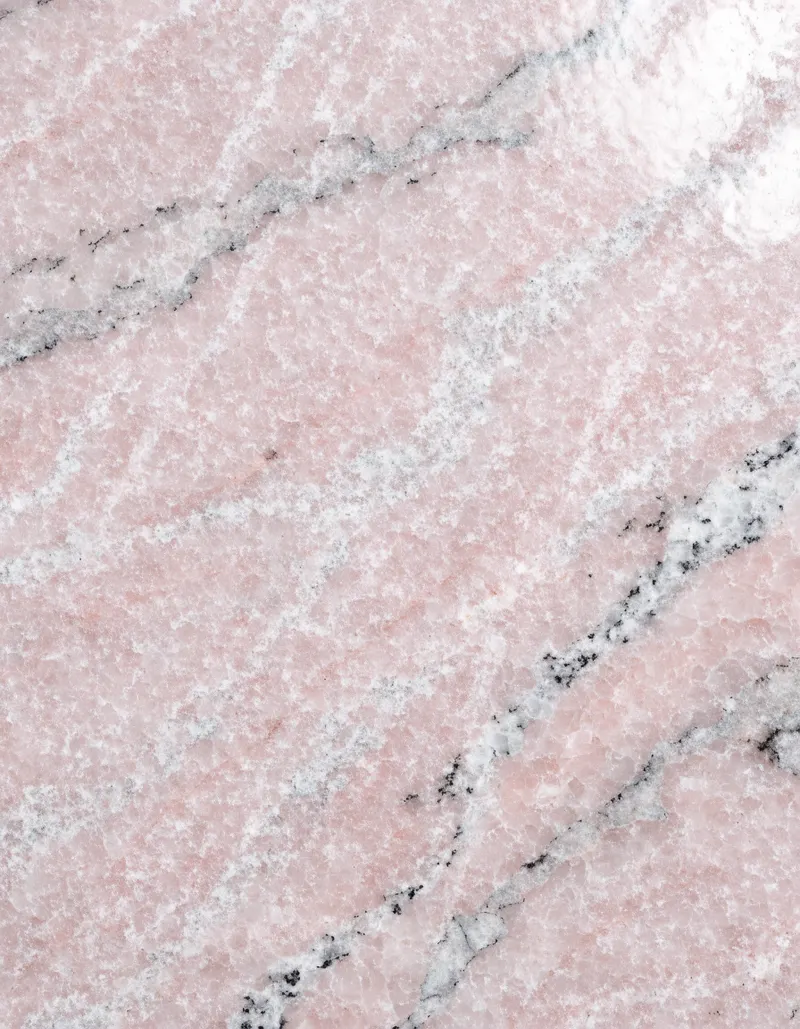
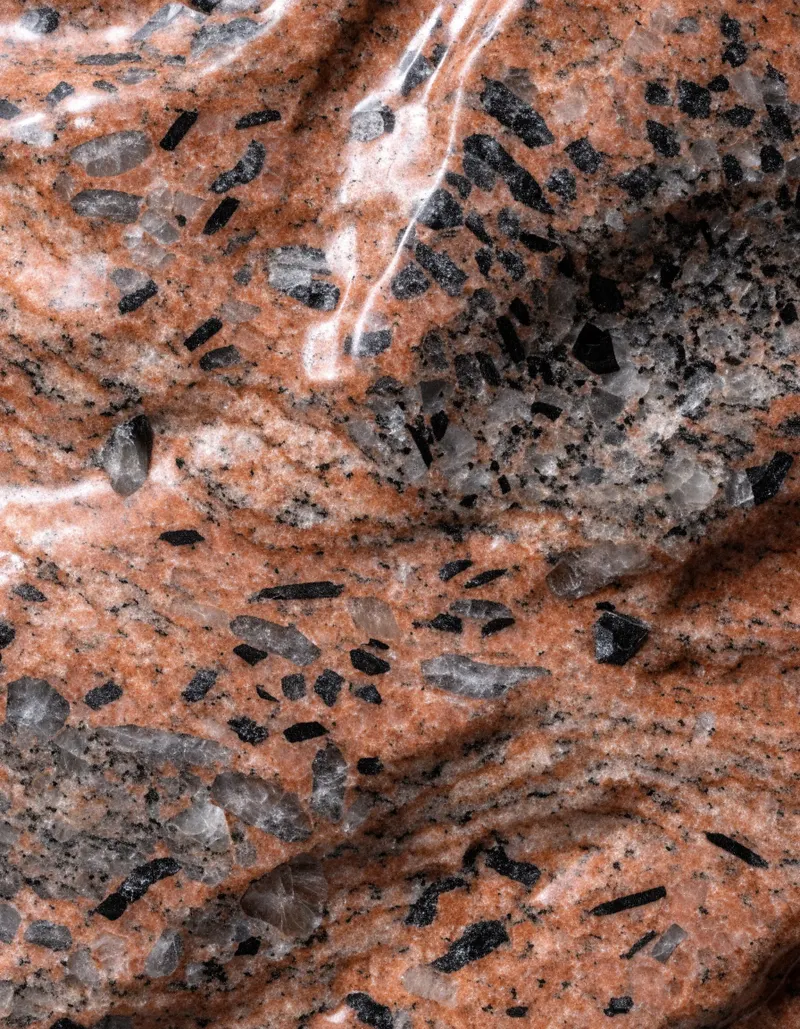
It is coarse grained, and the crystals are large enough to read one by one: pink to brick red feldspar, translucent grey quartz, dark flecks of mica. That structure is why it reads warm from across a courtyard and busy from arm's length.
Finish is a colour decision here. Polishing deepens the red and glazes the quartz; flaming lifts the face to a lighter, dustier, greyer pink because heat breaks the crystals at the surface. Approve a polished sample and specify flamed for the same elevation and you have specified a different colour. If a floor or façade must read as one field, say so early: colour runs from salmon to deep brick between benches, and selection can be planned around a single batch.
| Water absorptionASTM C 97 | 0.09 % |
|---|---|
| Bulk specific gravityASTM C 97 | 2634 |
| Modulus of ruptureASTM C 99 | 2300 psi |
| Compressive strengthASTM C 170 | 21500 psi |
| Abrasion resistanceASTM C 241 | 45.5 Ha |
| Flexural strengthASTM C 880 | 2400 psi |
Typical values for this stone. Natural stone varies between beds and blocks — ask us for the current test sheet before you specify.